|

Antique Furniture Glossary
Acanthus: A leaf used in Classical ornament, particularly on Corinthian
capitals (the tops of Corinthian columns); frequently found on furniture as carved decoration or cast bronze ornament, particularly from the French, Louis XVI period. (see twenty-one examples)
Ajouré: Pierced, used to describe the surface of an ornament or element. Literally "to let the light pass through." (feminine: ajourée) (see an example)
Ajourée: Pierced, used to describe the surface of an ornament or element. Literally "to let the light pass through." (masculine: ajouré)
Andirons: A pair of iron bars, usually decorated at the front end by a vertical member, placed at each side of the hearth and upon which the burning logs were supported. Sometimes referred to as "fire-dogs."
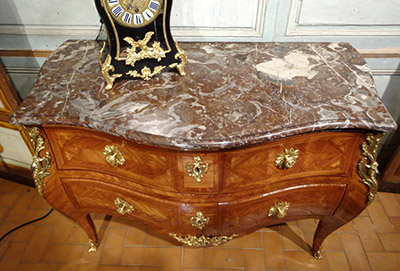
Arbalette: A serpentine form characteristic of the finest Louis XV commodes, buffets, and consoles. (see five examples)
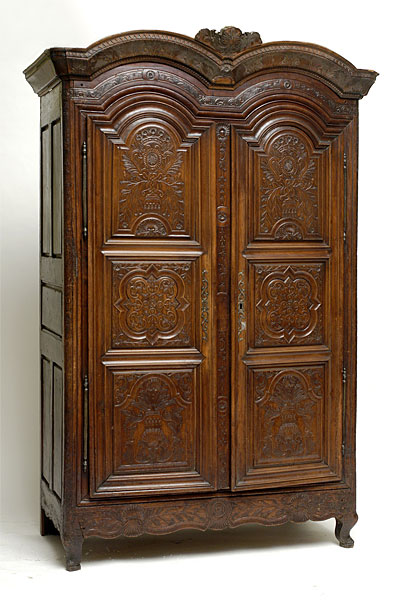
Armoire: A clothes cupboard. (see eight examples)
Art Nouveau: A period and/or style of decoration which first appeared in England in the 1880’s and spread throughout Europe, particularly Belgium, France and Germany, in the early 1890s. It survived for 20 years, reflecting a return to nature and to the values of good workmanship. The characteristics of Art Nouveau were drawn from nature and featured plants and flowers in sinuous curves and convolutions. (see fourteen examples)
Baroque: An elaborately ornamented style which was popular in Europe from approximately 1600 to 1750. In furniture, the Baroque style favored flamboyant carving, painting, and gilding. Typical motifs included acanthus, shells, and elaborate scrolls. (see twenty-three examples)
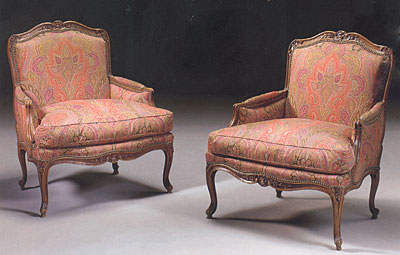
Bergere: Large, comfortable armchair with upholstered sides and loose cushion seat, popular in France in the Louis XV period and later. In England in the 18th century, these chairs were known as “burjairs” or “barjairs”. (see three examples)
Bibliothèque: From the French word for library, a bibliotheque is a piece of furniture with glass-fronted doors and several shallow shelves designed to hold books. (see an example)
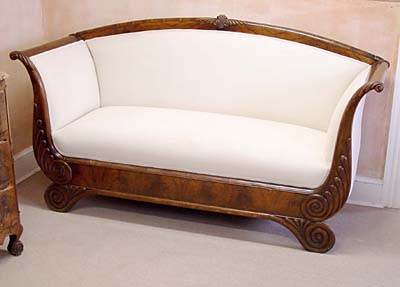
Biedermeier: Style of furniture and decoration current in Austria, Germany, Sweden and Russia between 1815 and 1848, featuring clean, simple lines and detailed veneer work with little ornamentation. (see three examples)
Bombé: French term for the outwardly curving shape of a piece of furniture, often a bombé chest. (see three examples)
Bronze d'ore: Gilded metal, especially cast brass or bronze gilded over fire with an amalgam of gold and mercury, used for furniture mounts and ornamental objects. (see fifteen examples)
Buffet á glissant: A buffet which has a smaller, recessed compartmented, known as the tabernacle. The defining feature of a buffet á glissant is that the tabernacle has doors that slide out to open, and in to shut. (see an example)
Buffet de chasse: A buffet table with a marble top which was typically used to prepare game. The term literally means “hunting table.” (see four examples)
Buffet deux corps: A two-tiered buffet with the top cabinet being shallowing than the bottom cabinet. The doors on the top panel can have wood or glass panels. (see three examples)
Bureau plat: A flat writing table or desk, usually having several drawers. (see three examples)
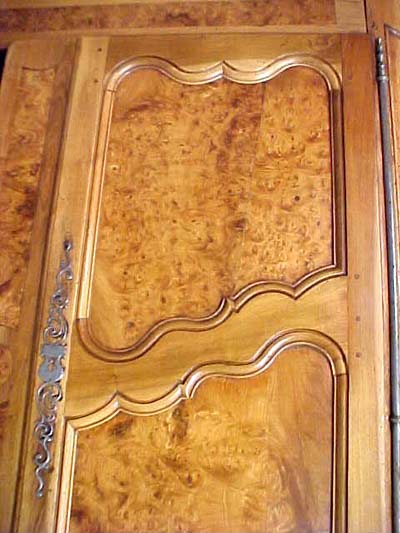
Burl: Wood from an abnormal or diseased portion of a tree root or trunk (often caused by injury to the bark). Burl wood is highly prized for furniture design because the grain exhibits spectacular mottled or speckled patterns that are used to create the beautiful veneers found in formal and provincial furniture. Although rare, burls are most often found in walnut and elm. (see five examples)
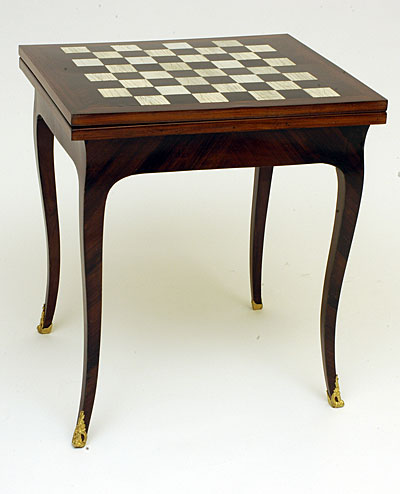
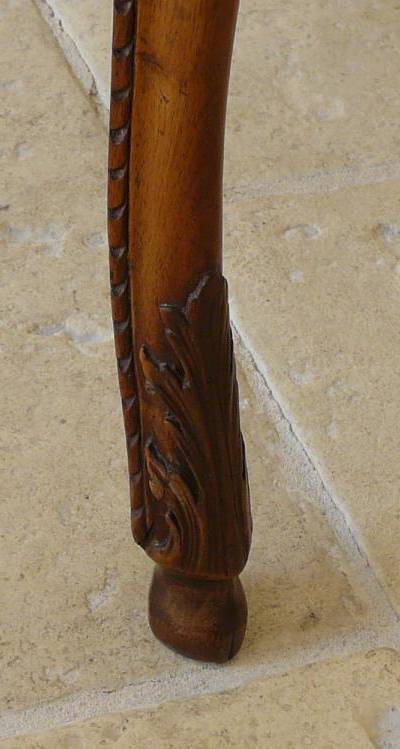
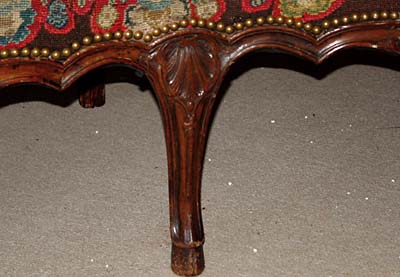
Cabriole: Sinuous, double-curved form used in legs (and feet). The upper portion curving outward and the lower portion curving inward in a gentle S shape. The cabriole leg is especially characteristic of the Louis XV style. (see twenty-seven examples)
Canapé: A sofa. (see eleven examples)
Candelabrum: A branched candlestick usually cast in bronze, white metal or silver.
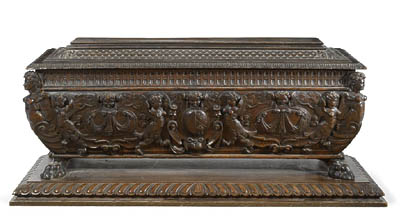
Cassone: An Italian bridal dowry chest often decorated with carved, gilt, inlaid, or painted decoration (see seven examples)
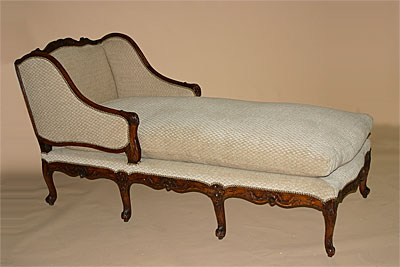
Chaise longue: An upholstered couch in the shape of a chair which is long enough to support the legs. (see four examples)
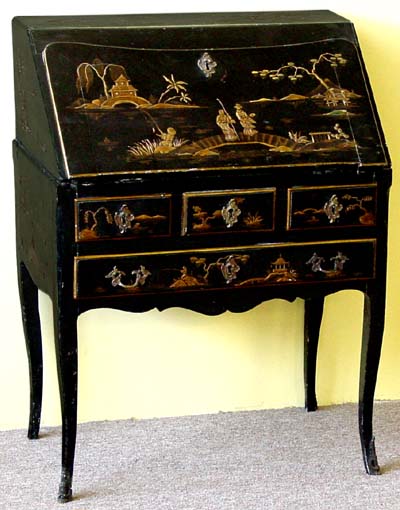
Chinoiserie: European furniture employing Chinese style decorations and ornamentation which was popular in the late 17th and 18th centuries. Elaborately painted laquer is a common feature of chinoiserie furniture. (see seven examples)
Classical: Having to do with Greek or Roman and their derivatives. (see thirty-seven examples)
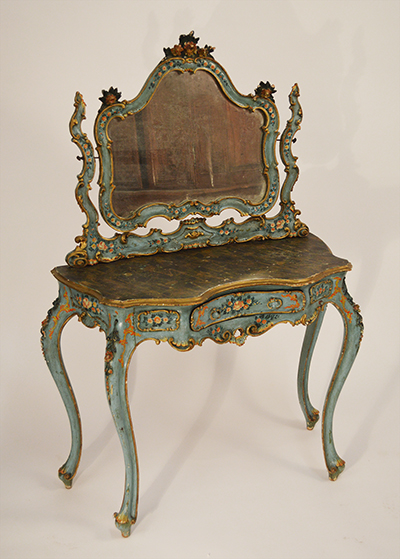
Coiffeuse: A small table topped with a mirror intended as a make-up and hairdressing table. (c.f., poudreuse) (see two examples)
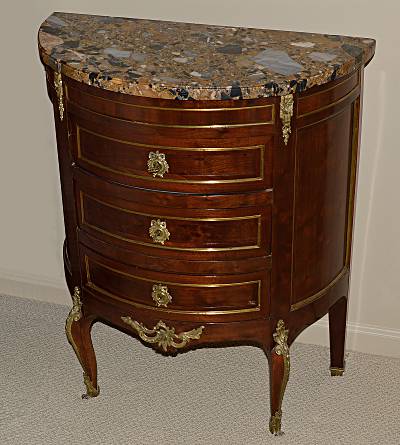
Commode: A low chest of drawers, usually with short legs, intended to be set against a wall. (see nineteen examples)
Console: A table that stands against the wall and is usually supported by two, bracket-shaped legs. (see thirty-one examples)
Coquille: Seashell or scallop shaped. (see an example)
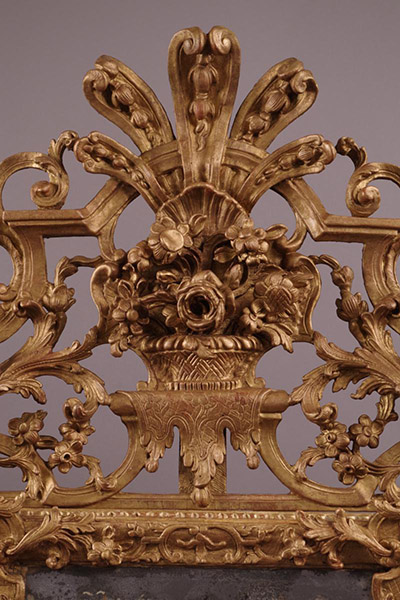
Corbeille a fleurs: Literally "flower basket." Characteristic of Louis XV style decoration. (see an example)
Corinthian columns: The most decorative of the classical Greek columns, Corinthian columns feature indented sides topped with flowering, leaf-like structures. (see an example)
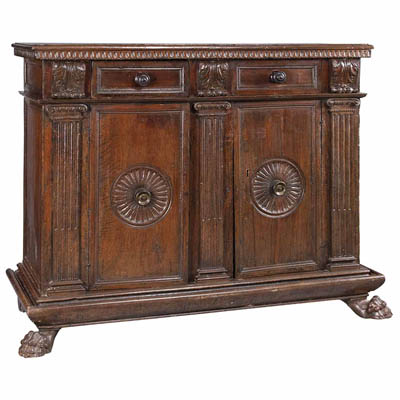
Credenzia: A side table or buffet with a flat surface for serving and cabinet space for storage. Italian credenzias often had drawers surmounting the lower cabinet doors. (see two examples)
Demi-lune: type of crescent-shaped table, commonly placed against the wall. Sometimes referred to as “half moon.” (see five examples)
Dos d'ane: A drop-leaf desk. (see an example)
Duchesse brisée: A chaise longue in two parts in which the portion for supporting the legs is longer than the seat element.
Enfilade: A piece of furniture, usually a buffet, in which the cabinet doors reveal connected compartments in a row. From the French “enfiler” meaning “to thread.”
Escutcheon: An ornament plate that surrounds a keyhole (see three examples)
Faience: A French term for glazed earthenware such as Quimper. (see an example)
Fausse paire: A pair of chairs, identical in form, that were crafted in different periods; typically, one of the chairs was constructed in the 18th century while the other was added in the 19th century to complete the pair. (see an example)
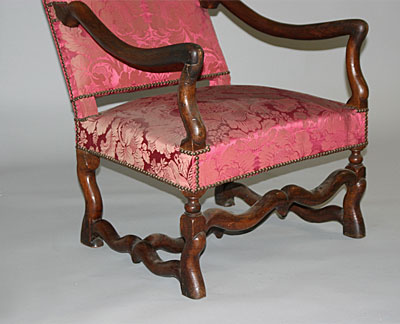
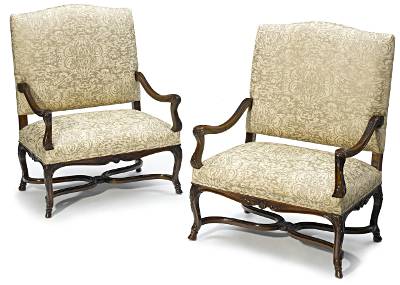
Fauteuil: An upholstered armchair with open sides. (see thirteen examples)
Fauteuil de bureau: A desk chair.
Gesso: A composition, often made with chalk and parchment size that is commonly applied to furniture, picture frames and mirrors as foundation upon which gilding or silvering was applied. (see an example)
Gilded: Covered in gold leaf. (c.f. gilt, gilding) (see nineteen examples)
Gilding: The decoration of surfaces with gold leaf. (c.f. gilded, gilt) (see three examples)
Gilt: Covered in gold leaf. (c.f. gilding, gilded). (see ninety-six examples)
Girandole: An ornate and ornamental candlestick holder, often backed with a mirror.
Gueridon: A small, round table made to support a candlestick or candelabrum.
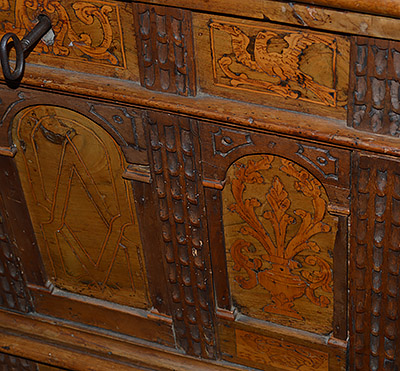
Inlay: A type of surface decoration that is created by insetting into a solid base a pattern composed of colored woods or other materials such as ivory, mother of pearl or metals. Inlay is recessed into a solid carcase, as opposed to marquetry, which is done with veneer. Also referred to as “intarsia” in italian. (see three examples)
Les os de mouton: Literally "Sheep's horn," this term refers to sinuous stretchers that are a quintessential element of Louis XIV furniture. (see two examples)
Lit de repos: A day-bed. (see an example)
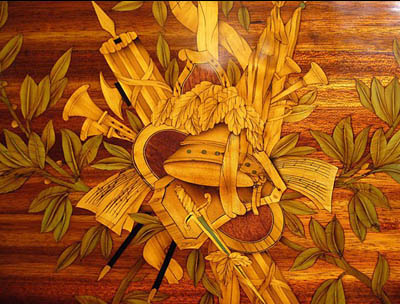
Marquetry: A decorative technique in which different woods are inlaid into the body of a piece to create an image, such as of flowers. While most of the time the inlay work is done with various woods, mother-of-pearl, ivory, tortoiseshell, or other materials are sometimes also employed. (see nine examples)
Marquise: A broad chair built to accommodate the wide skirts and panniers of the Louis XV pariod. (see an example)
Papier-mâché: Literal translation: mashed paper.
Articles such as table tops, small boxes and serving trays that were made from paper pulp and subsequently lacquered and decorated in Oriental fashion. The technique originated in China and was introduced to England by French immigrants in the 1600's. Papier-mâché furniture enjoyed great popularity in the mid 19th century when improved techniques allowed for the material to be shaped at angles that were impossible to achieve in wood.
Parcel gilded: Selective gilding on only portions or specific decorative elements. (see five examples)
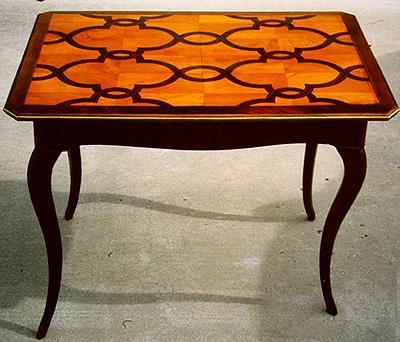
Parquetry: Furniture veneering in a decorative, geometric pattern. (see three examples)
Pastiglia: Gesso (plaster) that was dripped on furniture in layers and then carved and gilded in bas-relief in the Italian Renaissance period.
Pied de biche: Deer feet, typically found at the base of cabriole legs in Regence and Louis XV furniture. (c.f. pied de sabots) (see four examples)
Pied de sabots: Hoof feet, typically found at the base of cabriole legs in Regence and Louis XV furniture. (c.f. pied de biche) (see six examples)
Pietra dura: Italian form of pietre dure.
Pietre dure: Decorative work using inlaid, semi-precious stones to depict scenes, geometric patterns, floral motifs, etc.
Poudreuse: A dressing table. (c.f., coiffeuse)
Repoussé: A French term for the method of making a design in relief in metalwork, commonly brass, by hammering from behind so that the decoration projects outward.
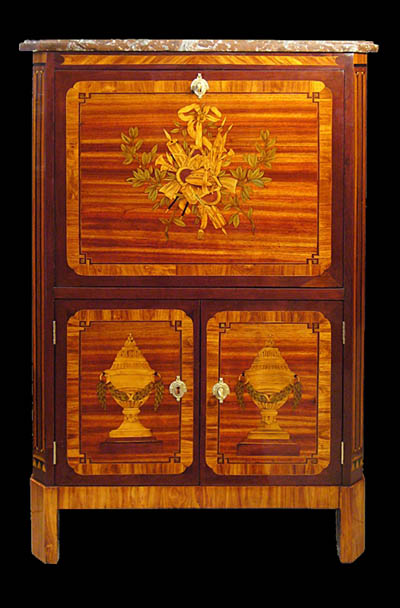
Secrétaire à Abattant
Secrétaire à Abattant: A drop front desk, usually with drawers or cupboard doors underneath.
Semainier: A tall, narrow chest of drawers with seven drawers, one for each day of the week.
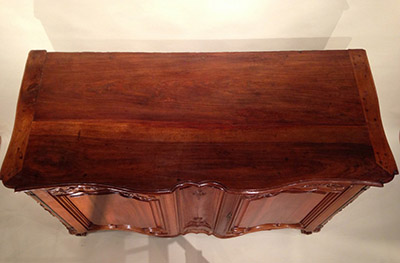
Serpentine: Furniture form characterized by a undulating, central, convex (protruding) surface with concave ends. Reverse serpentine forms exhibit a concave center portion and convex edges. (See also arbalette.) (see seven examples)
Tric trac: French name for the game of backgammon.
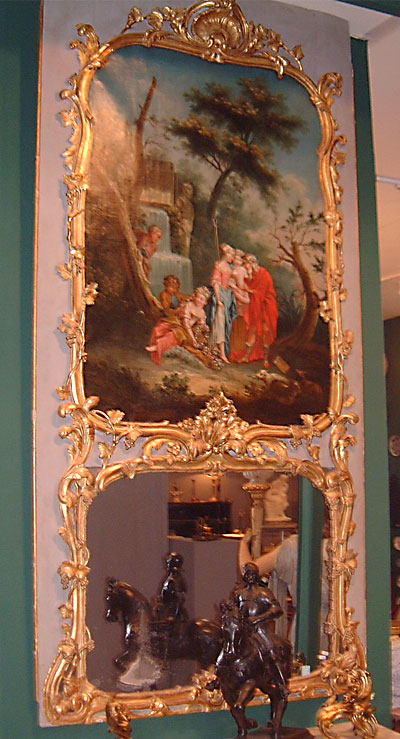
Trumeau: French term for pier-glass. In the Louis XV period it was traditionally decorated with a painted canvas that was set in the frame above the mirror. (see three examples)
Veneer: Decorative effect accomplished by the application of thin layers of ornamental (and often exotic) woods to an underlying, structurally supporting surface. (see twelve examples)
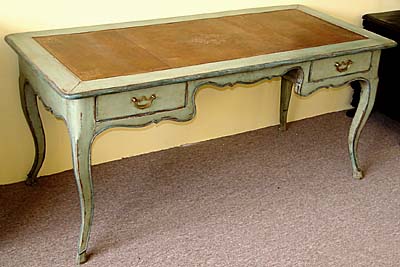
Verde gris
Verde gris: A shade of grayish green with teal and green highlights.
Vitrine: French term for display or china cabinet. (see three examples)
|
|